
Table of Contents
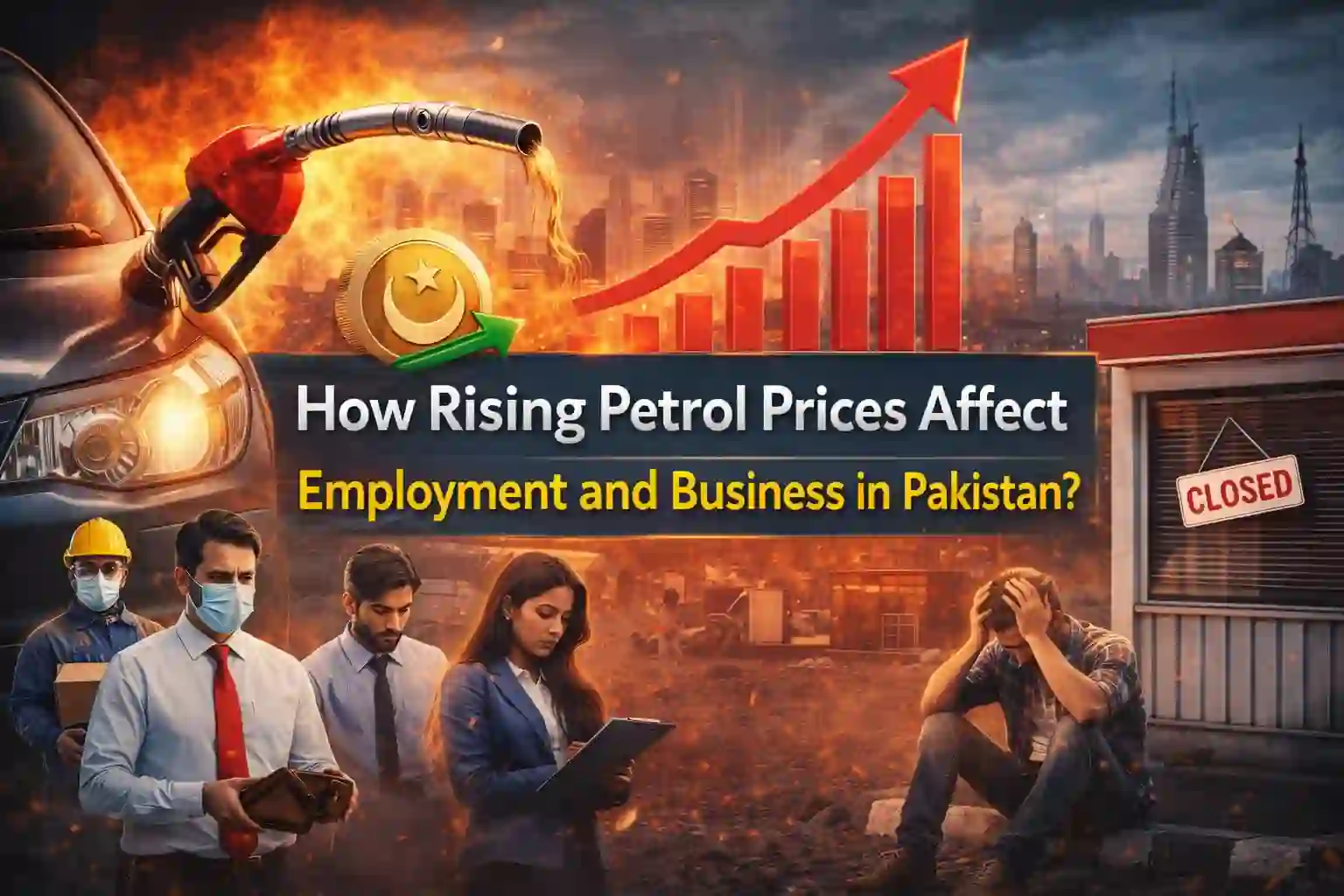
ToggleThe sharp rise in fuel prices has become one of the most serious economic challenges in Pakistan. As of April 2026, the petrol price in Pakistan today has reached Rs. 458.51 per litre, while diesel stands above Rs. 520 per litre. This continuous increase is not only affecting daily life but also creating long-term pressure on employment and business activity across the country.
Rising petrol prices do not just impact transport costs. They trigger a chain reaction that affects hiring, salaries, production, and overall economic growth. In this detailed post, we will explain how the rising petrol prices in Pakistan are influencing both employment and business sectors.
Petrol Price in Pakistan 2026 – Current Situation
Fuel prices in Pakistan have been increasing steadily due to global and local factors. The latest revision shows:
- Petrol: Rs. 458.51 per litre
- Diesel: Rs. 520+ per litre
This petrol price increase 2026 reflects international oil market trends, rupee depreciation, and government tax policies.

Why Petrol Prices Matter for Businesses
Fuel is a core component of almost every business in Pakistan. Whether it is manufacturing, transport, retail, or services, petrol and diesel are used at every stage.
When fuel prices increase:
- Transportation costs rise
- Production becomes expensive
- Supply chain costs increase
- Profit margins shrink
This is why the petrol price hike has a direct impact on business performance.

Impact of Rising Petrol Prices on Businesses
Increased Operational Costs
Businesses rely heavily on transportation for raw materials and product delivery. Higher fuel prices increase these costs, forcing companies to spend more to maintain operations.
Reduced Profit Margins
As expenses increase, businesses struggle to maintain profits. Many companies cannot increase prices immediately due to competition, so their margins shrink.
Price Increase for Customers
To survive, businesses eventually pass the cost to consumers by increasing product prices. This leads to reduced demand in the market.
Slow Business Growth
When costs rise and demand falls, business expansion slows down. Companies delay new projects and investments.

Impact on Small and Medium Businesses (SMEs)
Small businesses are the most affected by the petrol price increase in Pakistan.
- Limited financial resources
- High dependence on daily sales
- Difficulty in managing rising costs
Many small shops, delivery businesses, and local traders face serious challenges in maintaining operations. Some may even shut down due to continuous losses.
Impact on Employment in Pakistan
The effect of rising petrol prices is not limited to businesses. It directly affects employment as well.
Hiring Freeze
Companies reduce hiring to control costs. New job opportunities become limited, especially for fresh graduates.
Job Cuts
In extreme situations, businesses reduce staff to manage expenses. This increases unemployment.
Reduced Working Hours
Some companies cut working hours or shift to part-time employment to reduce costs.
Lower Salary Growth
Employers delay salary increments due to financial pressure.
Sector-Wise Impact on Employment
Transport and Logistics
This sector is directly linked to fuel. Rising petrol and diesel prices increase costs, affecting jobs and income.
Manufacturing Industry
Higher fuel costs increase production expenses, which can reduce workforce demand.
Retail Sector
When consumer spending decreases due to inflation, retail businesses reduce staff.
Delivery and Ride Services
Workers in this sector face higher fuel expenses, reducing their net earnings.
Impact on Salaries and Purchasing Power
One of the biggest issues caused by the petrol price hike is the imbalance between income and expenses.
Salary Stagnation
Most workers do not receive salary increases matching inflation.
Increased Living Costs
Food, transport, and utilities become more expensive.
Reduced Purchasing Power
Workers can afford fewer goods with the same income.
This creates financial stress for millions of households in Pakistan.
Inflation and Petrol Prices Connection
Fuel prices are a key driver of inflation.
When petrol prices increase:
- Transport costs increase
- Production costs rise
- Product prices increase
- Inflation rises
This cycle affects both businesses and workers, making economic recovery more difficult.
Real Example – Business Impact
Consider a small delivery business:
- Monthly fuel cost increases by Rs. 10,000+
- Delivery charges increase
- Customers reduce orders
- Profit decreases
To survive, the business may:
- Increase prices
- Reduce staff
- Cut operational costs
This example shows how the petrol price increase 2026 impacts real businesses.
How Businesses Are Adapting
Businesses in Pakistan are trying different strategies to manage rising fuel costs.
Cost Cutting
Reducing unnecessary expenses and improving efficiency.
Price Adjustments
Gradually increasing product prices to cover higher costs.
Digital Shift
Using online platforms to reduce operational expenses.
Route Optimization
Improving delivery routes to save fuel.
How Workers Are Affected
Workers face both direct and indirect challenges:
- Higher commuting costs
- Increased daily expenses
- Reduced savings
- Job insecurity
The rising petrol prices in Pakistan have made it difficult for workers to maintain financial stability.
Government Role and Possible Solutions
The government can play an important role in managing the situation.
Possible Measures:
- Reducing petroleum taxes
- Providing subsidies for essential sectors
- Improving public transport
- Stabilizing the currency
However, economic challenges make it difficult to provide immediate relief.
Future Outlook for Pakistan
The future of petrol prices depends on:
- Global oil market trends
- Exchange rate stability
- Government policies
Expected Trends:
- Prices may remain high in the short term
- Businesses may continue facing pressure
- Employment growth may remain slow
Long-Term Economic Impact
If petrol prices continue to rise:
- Unemployment may increase
- Business growth may slow down
- Inflation may remain high
- Economic stability may be affected
The petrol price increase in Pakistan is a key factor shaping the country’s economic future.
Tips for Businesses and Workers
For Businesses:
- Improve efficiency
- Reduce fuel wastage
- Optimize supply chains
For Workers:
- Plan travel carefully
- Reduce unnecessary expenses
- Explore additional income sources
Final Words – Rising Petrol Prices Affect Employment and Business in Pakistan?
The rising petrol prices in Pakistan are creating serious challenges for both employment and business sectors. With petrol prices reaching Rs. 458.51 per litre, the cost of running businesses and maintaining jobs has increased significantly.
From reduced hiring to increased living costs, the impact is visible across every part of the economy. Businesses are struggling to maintain profits, while workers are facing financial pressure due to stagnant salaries and rising expenses.
In the coming months, fuel prices will continue to play a major role in shaping Pakistan’s economic conditions. Careful planning, smart policies, and financial discipline will be essential to manage the impact of this ongoing crisis.