
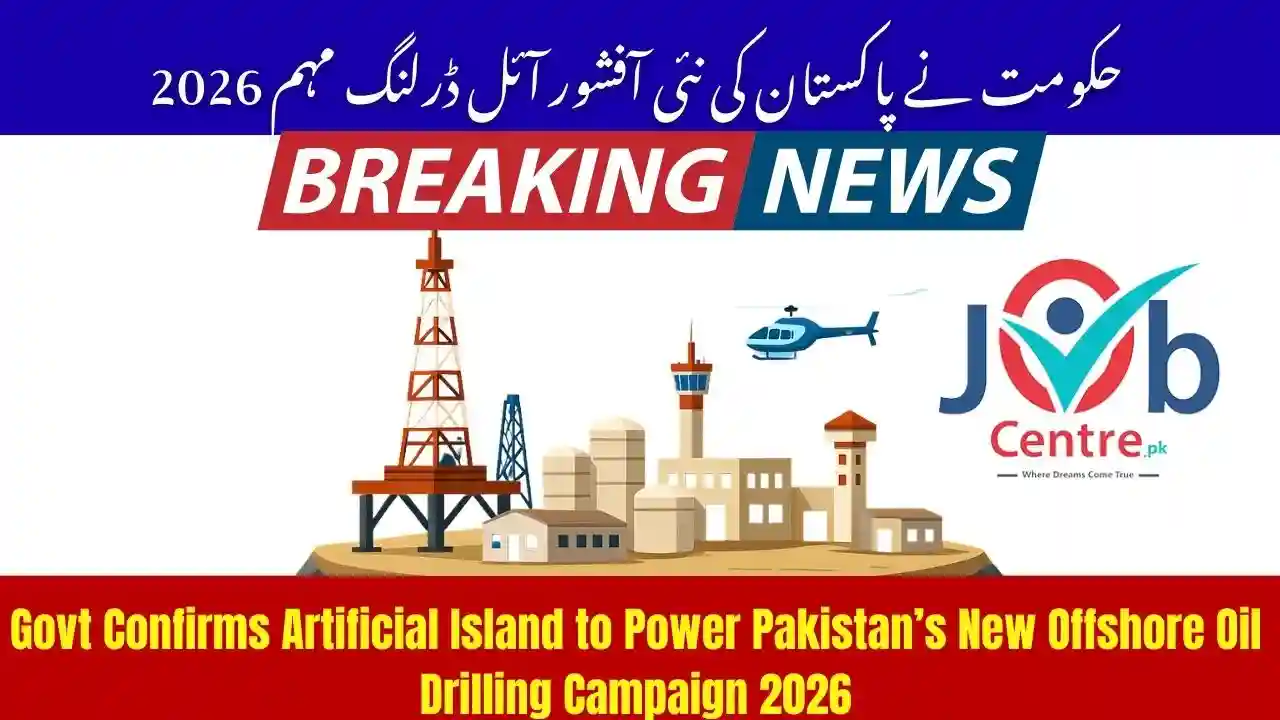
Artificial Island to Power Pakistan’s New Offshore Oil Drilling Campaign has officially confirmed the development of a man-made Artificial Island in the Arabian Sea to support its Offshore Oil Drilling Campaign 2026. This project marks one of the most ambitious energy initiatives in the country’s history. For decades, Pakistan has struggled with high oil import bills, low domestic production, and unstable fuel prices. With enormous untapped reserves estimated under the Indus Delta Basin, the government is now turning toward advanced offshore technology to boost energy independence.
The Artificial Island for offshore oil drilling will serve as the main operational hub, housing drilling equipment, storage sites, helipads, worker housing units, and deep-sea logistics centers. Inspired by successful mega-projects in UAE, China, Japan, and the Netherlands, this island is expected to become Pakistan’s new energy corridor in the Arabian Sea.
What Is the Artificial Island Project? – Complete Overview
The Artificial Island is a purpose-built structure created using modern dredging and coastal engineering technologies. It will be located near the Indus Delta region, close to Pakistan’s most promising deep-sea oil and gas blocks.
Key Features of the Artificial Island
- Offshore drilling headquarters
- Deep-sea drilling rigs
- Logistics and supply terminals
- Worker accommodation and medical units
- Safety monitoring systems
- Fuel storage and transportation pipelines
- Helicopter landing pads
- Navigation control systems
- Emergency rescue center
The island will operate as a central base camp for all offshore activities, reducing operational delays, risks, and transportation costs.
CM Punjab Hunarmand Program 2025

Why Pakistan Needs an Artificial Island for Offshore Oil Drilling?
Pakistan imports over 85% of its oil, which drains foreign exchange reserves and increases circular debt. Domestic production has remained low because deep-sea exploration is expensive and technologically complex.
The government believes that offshore fields may contain:
Large oil reservoirs
Multi-trillion cubic feet (TCF) of natural gas
Untapped deep-sea hydrocarbon pockets
Major Reasons for Constructing the Island
Reduced drilling costs
Less dependency on international support vessels
Faster and safer drilling operations
Improved logistics in rough sea conditions
Long-term offshore infrastructure development
Energy security and import reduction
This project aims to position Pakistan among emerging offshore energy markets.

How the Artificial Island Will Be Built?
The construction process will follow international coastal engineering standards and involve several phases:
Phase 1 – Site Survey & Geological Testing
Seabed mapping
Soil strength testing
Environmental impact assessment
Phase 2 – Land Reclamation
Dredging of sand
Layered land pouring
Stabilization using geotextile materials
Phase 3 – Structural Development
Foundation blocks
Structural piling
Sea-barrier walls
Flood-resistant elevated platform
Phase 4 – Operational Infrastructure
Drilling terminals
Transportation systems
Storage tanks
Offices and residential units
Phase 5 – Final Testing & Handover
Safety checks
Hydrocarbon testing
Final approval by energy authorities
This engineered island will be able to withstand storms, waves, and high-pressure drilling operations.
Skill Development Program for Transgender Community 2026

Expected Oil Discovery Potential – The Indus Delta Advantage
The Indus Delta Basin is considered one of the most promising regions for offshore oil and gas in South Asia.
Key reasons for high potential
Similar geological structures found in oil-rich regions (Middle East)
Positive results from past surveys
Presence of deep hydrocarbon traps
High-pressure reservoirs
Experts estimate that offshore reserves may hold:
Over 20–30 trillion cubic feet (TCF) of gas
Billions of barrels of recoverable oil
If successful, Pakistan could drastically reduce its energy imports.

Economic Impact on Pakistan
The Artificial Island and offshore campaign will bring multiple economic benefits:
1. Reduction in Oil Import Bill
Pakistan spends billions of dollars on oil imports. Local production will save foreign exchange reserves.
2. Job Creation in Engineering & Energy Sector
Thousands of jobs will be created in:
Offshore drilling
Geological surveys
Marine engineering
Logistics
Safety and rescue services
3. Increase in Energy Security
Domestic oil means fewer price shocks and more stable electricity production.
4. Foreign Investment & Technology Transfer
International partners will bring advanced offshore equipment and modern drilling practices.
5. Boost to Pakistan’s Maritime Economy
The island will act as a central zone for offshore shipping, energy transport, and commercial activities.
Environmental Safety Measures
The government has announced that environmental protection is a top priority.
Safety Measures Include:
Double-layered oil spill containment
Real-time monitoring sensors
Emergency shutdown systems
Marine wildlife protection zones
Strict waste management policies
Pakistan will follow guidelines set by:
International Maritime Organization (IMO)
UN Environment Programme
Offshore Petroleum Safety Regulations
International Support for the Project (Keyword: Global Offshore Oil Drilling Partners)
Several global companies have shown interest in partnering with Pakistan.
These may include:
European drilling companies
Chinese offshore specialists
Middle Eastern energy corporations
Multinational maritime engineering firms
Market experts say Pakistan is entering the era of deep-sea energy exploration, a domain previously limited to high-income nations.
Challenges Pakistan May Face (Keyword: Offshore Drilling Challenges Pakistan)
Despite the massive potential, some challenges exist:
1. High Upfront Investment Costs
Offshore drilling requires billions of dollars in investment.
2. Deep Water Technical Difficulties
Only highly specialized rigs can operate in deep waters.
3. Global Oil Market Volatility
Price fluctuations may affect commercial feasibility.
4. Environmental Risks
Any operational error can cause marine pollution.
5. Legal & Territorial Concerns
Maritime boundary rules must be followed strictly.
Timeline of Pakistan’s Offshore Oil Drilling Campaign 2026
2024–25: Geological studies & island design
2025: Start of construction
2026: Launch of offshore drilling campaign
2027–28: Expected preliminary results
2029 onwards: Commercial extraction (if successful)
PSDF-GIZ Skills Training Program for Reintegration of Returnees 2025
Will Pakistan Become an Energy-Sufficient Country? (Keyword: Pakistan Oil Production Future)
If even a fraction of the estimated reserves are confirmed, Pakistan could:
Reduce oil imports by 40–60%
Lower fuel prices
Strengthen the rupee
Stabilize the energy sector
Support local industries
Boost economic growth
The Artificial Island Project could be a turning point for Pakistan’s energy future.
Conclusion – A Bold Step Toward Energy Independence
The Government-confirmed Artificial Island for Pakistan’s Offshore Oil Drilling Campaign 2026 is more than just a construction project—it is a strategic investment into the nation’s economic future. With modern technology, global partnerships, and strong geological potential, Pakistan is entering a new era of deep-sea exploration. If successful, this project will reshape the energy landscape, reduce dependency on imports, and strengthen Pakistan’s economic stability for decades.
FAQs Artificial Island to Power Pakistan’s New Offshore Oil Drilling Campaign:
1. What is Pakistan’s Artificial Island Project?
It is a man-made island built in the Arabian Sea to support offshore oil and gas drilling operations.
2. Why is the government building a man-made island?
It will reduce operational costs, improve logistics, and provide a long-term offshore drilling base.
3. Where will the island be located?
Near the Indus Delta region, Pakistan’s most promising offshore hydrocarbon zone.
4. When will the drilling begin?
The Offshore Drilling Campaign will start in 2026.
5. How much oil and gas is expected?
Estimates suggest 20–30 TCF of gas and billions of barrels of oil may exist.
6. Will this reduce fuel prices in Pakistan?
If successful, local production will reduce imports and help stabilize prices.
7. Is the project environmentally safe?
Yes. Pakistan will follow international offshore safety standards.
8. Which countries are supporting Pakistan?
Energy companies from China, Middle East, and Europe have shown interest.