
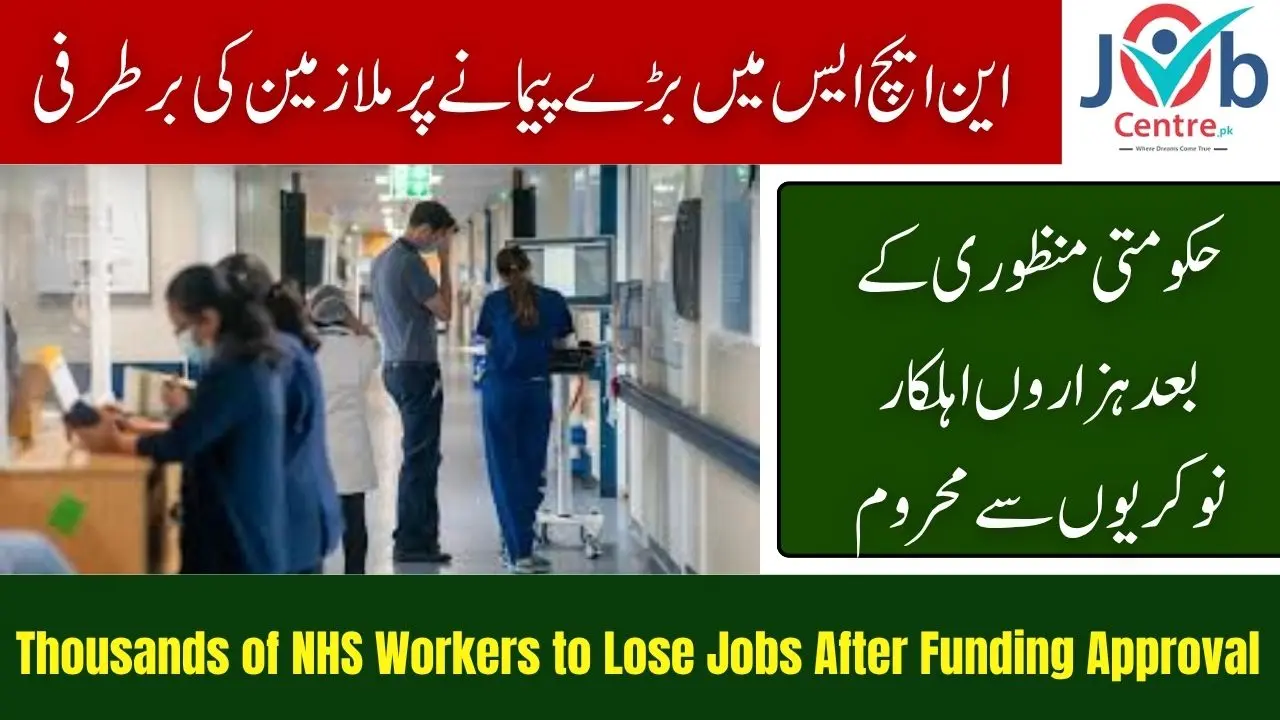
The UK Government has confirmed a major restructuring plan under the NHS Job Cuts 2025, marking one of the largest workforce reductions in the history of the National Health Service. This new reform aims to cut thousands of administrative and managerial positions across England in a bid to reduce bureaucracy and redirect funds toward patient care. Officials describe the plan as a step toward modernization, but unions warn it will lead to widespread unemployment and long-term service disruption.
Under the NHS Job Cuts 2025 initiative, nearly 18,000 staff members could lose their positions in the coming months. The decision follows approval of special redundancy funding that will allow NHS England to move forward with large-scale layoffs, particularly in non-clinical departments. The government argues this move will streamline management systems and improve efficiency within hospitals and regional health boards.
However, trade unions and employee associations have expressed deep concern over the NHS Job Cuts 2025, calling it a “dangerous gamble” that risks damaging morale and efficiency. They warn that administrative and support workers are the backbone of the healthcare system, ensuring smooth operations behind the scenes. With thousands now facing uncertainty, the debate over whether these job cuts will truly benefit patient care has become one of the biggest labour issues in the UK.

Why the NHS Is Cutting Jobs
For more than a decade, the NHS has struggled with growing costs, staff shortages, and increasing pressure to deliver high-quality care. As part of a new reform plan, ministers say administrative and managerial positions will be reduced so more resources can be directed toward doctors, nurses, and patient services.
The decision means thousands of NHS workers could soon lose their jobs. Most affected roles include clerical staff, regional coordinators, and local health-board managers. The government argues these changes are essential to “cut unnecessary layers of management” and free up money for direct care.
224 Agriculture Graduates Training in China 2025 – Final Stage of 1000 Training Program Begins
Government’s Official Statement
A spokesperson from the Department of Health confirmed that the restructuring will move ahead after funding approval. “We are committed to building a leaner, more efficient health service that focuses on patient outcomes, not paperwork,” the statement said.
According to the plan, NHS England will be allowed to exceed its annual spending limit temporarily to pay redundancy costs. Officials emphasised that no frontline clinical positions—such as doctors, nurses, and emergency responders—will be targeted.
Reaction From Unions and Employees
Health unions have condemned the redundancies, calling them short-sighted. Representatives from UNISON and the Royal College of Nursing (RCN) say that administrative staff play a crucial role in running hospitals smoothly. Without them, paperwork delays and scheduling problems could affect overall patient care.
One union leader noted, “You can’t remove the people who coordinate patient records and expect nurses to pick up the slack.” Many employees who have served the NHS for decades now fear unemployment and financial instability.
Economic and Social Impact
The NHS Job Cuts 2025 announcement comes at a time when the cost of living in the UK remains high. Thousands of middle-income households rely on NHS employment, and losing those salaries could impact local economies—particularly in towns with large administrative centres.
Employment experts warn that the redundancies may push more skilled workers into the private sector or even overseas jobs, further deepening staff shortages in public healthcare.
| Category | Approximate Jobs Lost |
|---|---|
| Administrative & Clerical | 10,000–12,000 |
| Management & Coordination | 4,000–5,000 |
| Support Staff | 2,000–3,000 |
| Total Estimated | ≈ 18,000 |
Impact on the Labour Market
Job-centre analysts expect thousands of newly unemployed workers to enter the job market in early 2025. While some may quickly find positions in private healthcare or digital administration, others will need retraining to adapt to new industries.
NHS employees often possess transferable skills such as record-keeping, compliance, data handling, and teamwork—all highly valued in finance, logistics, and technology sectors. Job Centre UK has already announced dedicated support sessions to help these workers prepare CVs, search vacancies, and apply for new roles.
Worker Rights and Redundancy Pay
Under UK employment law, any NHS worker with more than two years of continuous service is entitled to redundancy pay. The amount depends on age and length of service, usually one week’s pay for each full year worked. Those with long service records may receive enhanced packages under NHS terms and conditions.
Affected employees must also be consulted before dismissal, and they have the right to apply for redeployment within other NHS branches. Staff are encouraged to contact their local HR departments to discuss voluntary redundancy or early-retirement options.
Regional Breakdown of Cuts
The redundancies are expected to affect all parts of England but will be concentrated in London, the Midlands, and northern regions. Rural areas might experience slower response times in administrative operations as local offices merge or close.
Some smaller trusts will combine departments such as HR, finance, and communications to reduce duplication. The government insists patient-facing services will remain unchanged.
Training and Redeployment Programs
To reduce unemployment numbers, NHS England has launched limited redeployment programs allowing staff to shift into other departments or retrain for digital-health roles. Free short courses in IT management, medical coding, and health-data systems are being offered in partnership with local colleges.
However, demand for these opportunities is far higher than available seats, raising fears that many employees will still face redundancy without alternative placement.
Govt of Pakistan Law and Justice Jobs 2025
Political Reactions
Opposition parties have criticised the Conservative government for failing to protect jobs. Labour’s health spokesperson described the move as “a betrayal of dedicated public servants who kept the NHS alive during the pandemic.”
Government ministers counter that the reforms are essential to prevent waste and ensure taxpayers’ money is “spent wisely.” They claim the restructuring could save over £1 billion annually once complete—funds that will be reinvested into hospitals and patient-care initiatives.
Voices From the Workforce
Behind the statistics are real stories of uncertainty. Maria, an NHS administrator in Manchester with 18 years of service, said: “We’ve given our lives to this job. Now we’re just waiting for an email to know if we still have one.”
Such testimonies reveal the human cost of the NHS Job Cuts 2025 plan. Many fear not just losing income but also the emotional impact of leaving a service they believe in deeply.
Expert Opinions
Labour-market experts agree the plan may achieve efficiency gains only if the government follows through with investment in new technology and streamlined digital systems. Otherwise, they warn, the loss of experienced staff could cause temporary chaos.
Dr Liam Turner, a public-policy analyst, explained, “Cost-cutting alone rarely solves systemic issues. The focus should be on smarter management, not just fewer managers.”
Support From Job Centre
UK Job Centres are preparing targeted assistance for redundant NHS staff. Services will include one-to-one career guidance, interview coaching, and digital-skills workshops. Special recruitment drives are expected in the care sector, insurance, and local government departments that can absorb experienced administrators.
Those struggling with immediate financial hardship will be guided toward Universal Credit or Jobseeker’s Allowance applications while they look for new employment.Broader Effects on Healthcare Delivery
Analysts believe patient services might face temporary disruption while new structures settle in place. Tasks such as billing, scheduling, and inter-hospital communication may slow down before efficiency improves.
Over time, if the reform succeeds, hospitals could benefit from modern digital workflows and reduced administrative delays. But if not managed properly, these cuts risk creating new bottlenecks in already overstretched hospitals.
Long-Term Goals
The government’s ultimate goal is to reshape the NHS into a streamlined organisation capable of saving resources while maintaining service quality. Officials say these cuts will enable better pay for frontline workers, investment in hospital infrastructure, and improved emergency-care systems.
The success of the plan will depend on how well authorities manage retraining, redeployment, and reinvestment. Transparent communication with unions and staff will also be crucial to avoid strikes and public backlash.
Conclusion
The approval of redundancy funding marks a turning point for the NHS workforce. Thousands of staff members are preparing to leave, while policymakers promise a leaner, more efficient system. The coming months will reveal whether this decision creates the promised savings—or whether it damages one of Britain’s most trusted public institutions.
For affected workers, Job Centres and career-transition programs will be lifelines, offering training, counselling, and financial guidance. As the NHS Job Cuts 2025 unfold, both the healthcare system and the wider job market will be watching closely.